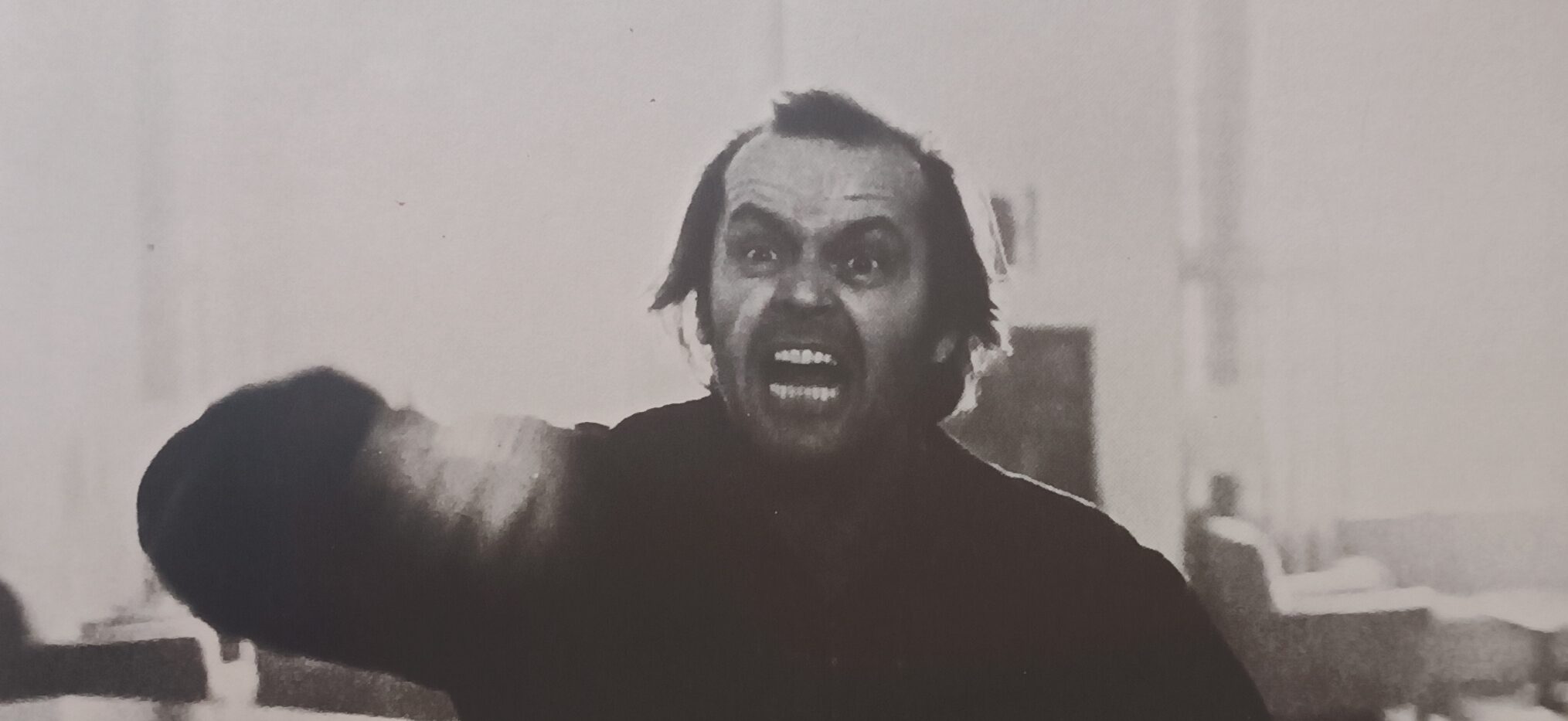
One of the most well-known book adaptations of all time, The Shining (1980), is considered a cult classic among many, inspiring artworks of all sorts to this day. It is a widely known fact that the ending differs from the book, but did you know that the last scene was cut from the movie? Let’s find out what happened in that final scene, among other interesting movie details.
A Psychological Story in a Paranormal Dress
When Stephen King wrote his 3rd novel, The Shining (1977), he was still struggling with his alcoholism, and channeled this experience into the main character, Jack Torrance’s problematic behavior. The book touches on other important topics as well, such as domestic violence, psychosis, cabin fever, and the belief in the paranormal.
Kubrick himself was always interested in paranormal phenomena, but that’s not the reason he chose this subject. In an interview with Michel Ciment, he discussed how he was captivated by the book’s extraordinary balance between psychological and supernatural elements, concluding that Jack is insane, but did he imagine everything? It’s up for interpretation.
In the interview, he discusses how he liked most of the source material, but wasn’t fond of the ending – he thought it wasn’t interesting enough. He also wanted something the viewers wouldn’t be able to predict, so he changed it with the help of screenwriter Diane Johnson. (The director chose to work with Johnson over King because he believed she would be easier to work with.)
Kafka, The Characters, and The Steadicam
Kubrick was particularly inspired by Franz Kafka, who described the most impossible scenarios with meticulous realism, presenting his stories with a sort of journalistic edge thus creating an unsettling atmosphere. His goal was to tell this paranormal tale in the most realistic way possible: people had to behave as they normally do, even in the most bizarre circumstances.
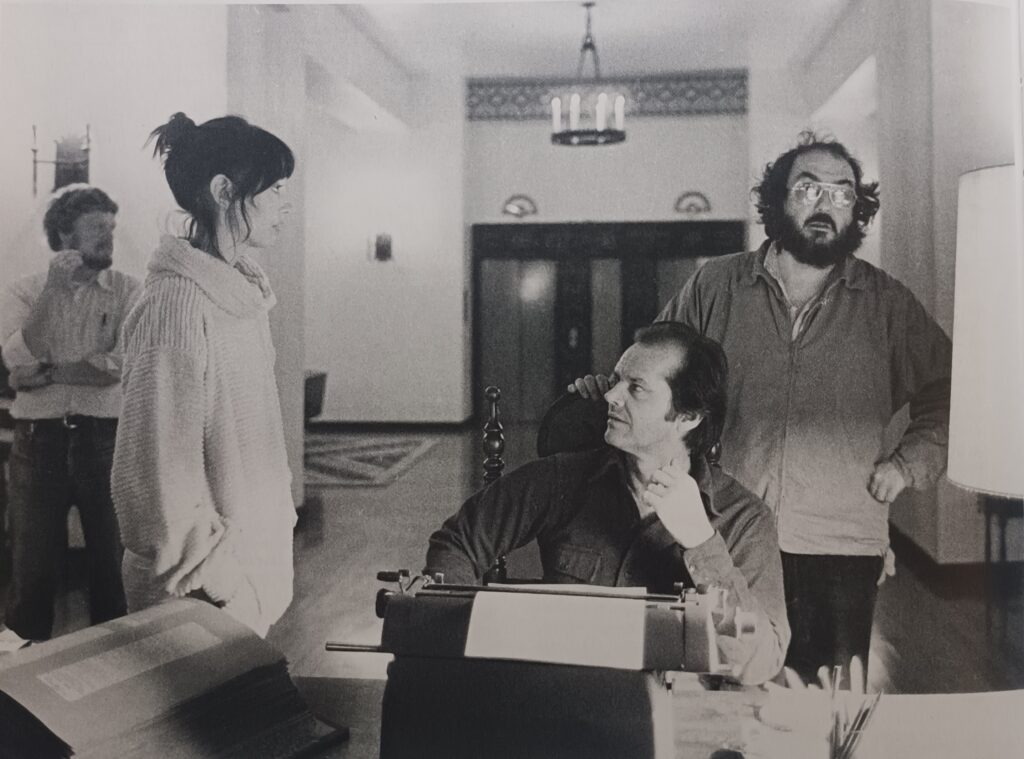
As for the actors, Jack Nicholson was his first and only choice for the role of Jack Torrance, who perfectly embodied the character he wanted to present. For the female lead, again, Kubrick wanted something different from the original Wendy. The character described in the book was much stronger and more confident, but Kubrick wanted the actress to be both appealing and irritating; thus, the husband’s hatred towards her would be more believable. According to Kubrick, Shelley Duvall portrayed exactly the type of woman who would marry a person like Jack and stay with him through everything. Their son, Danny, was played by 6-year-old Danny Lloyd, who was chosen from about five thousand children.
Technologically speaking, The Shining was one of the first movies to utilize Steadicam, a mechanical support that eliminates the camera instability caused by the operator’s movements. To ensure the filming is as smooth as possible, Kubrick hired Garrett Brown, the inventor of Steadicam himself. Since some scenes required shooting from barely above the floor, Brown updated the camera stabilizer with a “low mode” feature, allowing the use of new creative angles.
The Alternative Ending of The Shining
As I mentioned earlier, Kubrick wasn’t really impressed by the original ending and wanted to end the movie on a different note; so, instead of an explosion, we got ice and maze. Despite Johnson (the screenwriter) pushing for the death of Danny, Jack fails to murder his family and freezes to death, while his wife and son escape the scene.
But that’s not how the movie was supposed to end: the last scene was cut from the final version. In this alternative ending, Wendy and Danny wake up in a hospital. The hotel manager pays them a visit and invites them to live at his place, but Wendy doesn’t give him an answer. When he walks away, he passes Danny, who plays in the hallway. When he gets near the exit, he turns around and gives the boy the tennis ball the twin girls roll to him in the hotel. Danny looks at the ball, then the manager, and realizes that the man was aware of the hotel’s mysteries all along.
Why Stephen King Hated Kubrick’s Version of The Shining
While the movie is often dubbed a masterpiece, it didn’t make everyone happy. Stephen King is definitely not a fan, and one of the main reasons for his disapproval is the film’s lack of warmth:
“…I think The Shining is a beautiful film, and it looks terrific, and as I’ve said before, it’s like a big, beautiful Cadillac with no engine inside it.”
King also hated the way Kubrick simplified Jack’s character: movie Torrance was mentally ready to kill from the beginning. That’s why it doesn’t take too much until his rage and frustration take over and become uncontrollable (Kubrick talked about this in his interview with Michel Ciment).
“…the character of Jack Torrance has no arc in that movie. Absolutely no arc at all. When we first see Jack Nicholson, he’s in the office of Mr. Ullman, the manager of the hotel, and you know, then, he’s crazy as a shit house rat. All he does is get crazier. In the book, he’s a guy who’s struggling with his sanity and finally loses it. To me, that’s a tragedy. In the movie, there’s no tragedy because there’s no real change.”
While movie Jack’s main issue is the lack of character development, King believes that Kubrick’s Wendy is “one of the most misogynistic characters ever put on film” and the complete opposite of the strong female lead he wrote.
Sources:
Kubrick by Michel Ciment (1999, Rizzoli)
Stephen King On What Hollywood Owes Authors When Their Books Become Films: Q&A (Deadline)
Stephen King returns to The Shining with Doctor Sleep (BBC)
Read more about movies here.
This post may contain sponsored or affiliate links.